All posts by Dr. James Thomas Jones III

A Black Man’s Recollections of September 11, 2001

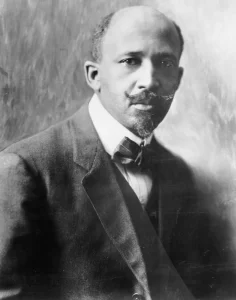
In his epic work, The Souls of Black Folk, W.E.B. DuBois describes the status of Black folks in the following manner.

One ever feels his twoness,—an American, a Negro; two souls, two thoughts, two unreconciled strivings; two warring ideals in one dark body, whose dogged strength alone keeps it from being torn asunder.

The history of the American Negro is the history of this strife,—this longing to attain self-conscious manhood, to merge his double self into a better and truer self. In this merging he wishes neither of the older selves to be lost. He would not Africanize America, for America has too much to teach the world and Africa. He would not bleach his Negro soul in a flood of white Americanism, for he knows that Negro blood has a message for the world. He simply wishes to make it possible for a man to be both a Negro and an American, without being cursed and spit upon by his fellows, without having the doors of Opportunity closed roughly in his face.
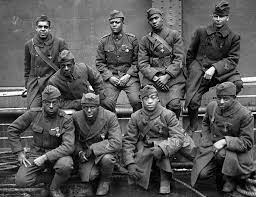
Although written more than a century ago, DuBois’ words still represent Blacks’ plight with marksman’s accuracy.

Moments such as 9/11 serve as a reminder to Blacks that our ancestor’s labor brute, brawn, and ingenuity are cheapened, if not denied, by those who most benefit from their contributions. If I did not know any better, I could be convinced that the advancement of Blacks in this nation hinges upon one’s willingness to deny one of this nation’s grandest traditions, racism.

Americans old enough to remember September 11, 2001, can tell you where they were when the terrorist attack occurred. I was asleep when it happened, having fallen asleep after writing all night on my Doctoral Dissertation. My peaceful slumber was interrupted by a phone call from my best friend, Damon Thomas, a schoolteacher who lived in Harlem and worked in Manhattan. Since my phone rarely rings, a status that reflects my interest in the lives of others and the world around me, I stirred from my slumber, placed the dreaded device next to my ear, and heard the following.

So, whose ass do we have to kick?

I am sure that you understand my shock at hearing such somber words. My mind and emotions instantaneously went to questioning which of our loved ones had been unwilling victims of some unrighteous attack that must be avenged.

Little did I know that this brother, who I had seen transform from a relatively loose association with The Nation of Gods and Earths to a schoolteacher at an elite private Jewish school, was referencing the less than two hours old attack upon his city, borough, and country. The attacks on September 11, 2001, activated something inside of my best friend. This instantaneous desire to stand for country was nothing new; Blacks had experienced it before this nation’s founding and every moment of crisis after its creation.
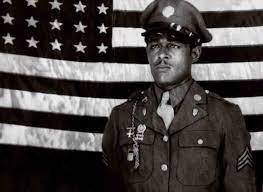
Despite other’s foolish attempts to deny Black patriotism, the historical record proves that no other group has been more prepared to place their grievances on the back burner for the sake of the country than Blacks. An argument could be made that Black folks are the most patriotic, especially considering the sparse rewards for serving this nation.

So, on this day of remembrance for the lives lost and changed forever due to the events of September 11, 2001, I hope that we can pause the in-fighting and realize that in the grand scheme of things, we are all in the same boat. Unfortunately, there appear to be segments of our citizenry and political class willing to cut off their nose to spite their face by denigrating others in their pursuit of money and political power. Until such people learn that we are inextricably tied together, they will continue pushing others they disagree with off the ship we are all traveling on.

Maybe the day will come when Americans are so enraged by the ill-treatment of their fellow citizens, regardless of their color, that they will stand against those evildoers by asking their victims, “Whose ass do we have to go kick?” One thing is sure: we are nowhere near that point right now.

We can always achieve such things in the future.

Dr. James Thomas Jones III

© Manhood, Race, and Culture 2024.
Are Black Males Disappearing from HBCUs?

One of the most unfortunate developments of my nearly half-century association with education as a student and now faculty member has been the steady decline of Black males’ successful engagement with American colleges and universities. Although I would like to attribute my noticing this decline to my entrance into the professorate, truthfully, my contemporaries have been discussing this decline in many ways, ranging from the droves of Black women available for dating during our collegiate years to the fact that the classrooms we now lead are largely devoid of Black male students.

It is a humbling experience to see the decline in Black males engaged in Historically Black Colleges and Universities.

A recent study by the American Institute for Boys and Men has brought structure to what we intuitively knew were observations that stretched beyond being anecdotal. According to the above research, Black male’s engagement with higher education has been in a steady decline over the past half-century. Consider the following data about Black males’ dwindling attendance at HBCUs.

YEAR       BLACK MALE ENROLLMENT

YEAR BLACK MALE ENROLLMENT
1976 38%
2005 31%
2022 26%

There is no other way of viewing this decline than the fact that within an economy that shifted from a manufacturing to a service economy during the 1980s, Black males have been left behind. In contrast, all other groups have increased their presence on HBCU campuses.

Many have chosen to point at the steady success of Black females as a factor in the decline of Black men on HBCU campuses; studies indicate that their numbers have not increased notably. The fact that many have attempted to pit the future fortunes of Black male collegians versus their female counterparts suggests an inability to view this problem from a reasonable perspective aimed at addressing this worsening situation.

Black female collegians must be celebrated for their voluminous presence on HBCU campuses, not criticized as occupying spaces reserved for African-American males. Such arguments are counter-productive for many reasons. A more insightful analysis will lead to the realization that as Black males have receded from the classroom due to a litany of reasons, none of which deals with their intellectual capacities, a diverse population of non-Black groups have stepped into those enrollment slots.

This worsening pattern of Black males’ being left out of higher education must be addressed expeditiously. If left unchecked, Black America will suffer in every socioeconomic way imaginable, from worsening marriage rates to single-parent households. We must never ignore the undeniable fact that the core duties of Black fathers are to provide for and protect their families. The dwindling numbers of Black males in today’s HBCU classrooms threatens this and succeeding generations of Black men, women, and children in a nation where Race continues to matter mightily.

Dr. James Thomas Jones III

© Manhood, Race, and Culture 2024.
Without Work, All Is Rotten: The Continuing Last Place Status of Black Male Workers

While earning a Ph.D. at The Ohio State University, I decided to honor the path taken by my father and many uncles who were card-carrying union workers by focusing many of my studies on Labor History. I had lived a life that made any denial of the labor movement impact on my life foolhardy as it was instrumental in my material existence.

While studying America’s longest-running war between workers and owners, I encountered an illuminating quote: “Without work, all is rotten.” Those words influence my worldview to this moment. I lived in a home where work dictated so much about our lives, such as when we would vacation and what we could afford to eat.

I understood early on that my fate as a worker was no different than my ancestors. The only thing left to determine was what sector I would exchange labor for access to goods. Work anchored my life.

For obvious reasons, it is always daunting when matters of Race and labor converge. Of course, the monopolization of politico-economic resources by wicked white men contextualizes Black men’s engagement with work. Pew Center research supports Blacks’ observations about Black male employment challenges.

A recent study confirmed what Blacks already knew. According to the data, the engagement of Black men in the work sector lags behind all other groups (white, Asian, and Hispanic). Of course, there are reasons for this unfortunate yet familiar reality. The historical narrative and numerous studies have pointed toward a wicked brew of racial discrimination, inferior schools, incarceration, lack of apprenticeship, and job training opportunities as the culprits in the maintenance of far too familiar last-hired, first-fired positions ensnaring Black men.

While more Black men between the ages of 25 and 54 are working at an 81% rate that outpaces previous years, other groups outpace them with an 87% rate. These numbers only reflect those actively pursuing legitimate employment. The reported numbers of Black male unemployment understate the problem as such data fails to include the incarcerated.

Although a sober thought, Black men who are not gainfully employed are unmarriageable because they are unable to provide for a wife and offspring. Such realities severely handicap the Black community, whose flourishing hinges upon the family to serve as a cornerstone.

Ultimately, it becomes clear that a single policy decision is inadequate to solve what could be termed the most crucial matter facing Black America. There is no one-size-fits-all solution to such a historically-based problem undergirded by racism.

One thing is sure: without work, everything is rotten.

It always has been, and it always will be.

Dr. James Thomas Jones III

© Manhood, Race, and Culture 2024.
When Hope Doesn’t Spring Anymore: A Black Man’s Growing Frustration with Black Folks

As another school year begins, the saying that hope springs eternal is appropriate. Parents and students consider unique academic possibilities achievable at the beginning of the school year. Educators likewise view students they have yet to meet as future leaders and scholars endowed with the ability to correct a world that has gone off the rails far too often. Yes, optimism rules at the beginning of every school year.

Although I can pinpoint neither the moment nor the reason my euphoria regarding my students and Black folks dissipated, it is gone. I no longer believe that there is a remote possibility that Black folks will defeat the systematic racism that has facilitated their demise. Of course, there was a time when I believed our triumph was inevitable. I no longer view our present plight and prospects through a hopeful lens.

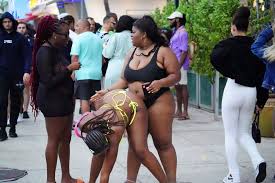
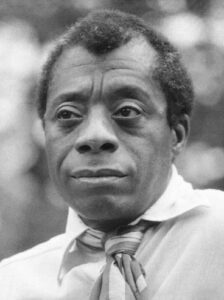
In hindsight, it is evident that my optimism eroded simultaneously with black culture’s devolution. The corrosive effects of Black folks ceding the educational process and the intellectual diet the overwhelming majority of men, women, and children consumed over the past eighty years has likely pushed us to the point of no return. The best pieces of evidence for such an assertion are Blacks’ physical appearance and far too common deplorable language. These matters remove all room for anyone to argue against James Baldwin’s cryptic assertion that the white man made the nigger by controlling his schools and feeding him distasteful images of himself. Unfortunately for Black America, these images have become the norm.

The most daunting aspect of Black America’s current cultural state is the dominant influence of those who believe Blackness is synonymous with ghetto culture, dress, and language. They have set the standard that all others, including better-educated Blacks, are being forced to conform to. Things have gotten so bad that the times when there was a notable difference between the streetwalker and the female collegian, the thug, and the black male scholar are a distant memory as they have now become nearly indistinguishable.

Educated Blacks avoid this discussion like the plague. Although I cannot speak for others, I can tell you that I have tired of defending the foolishness of culturally deprived and historically illiterate Black folks against white, yellow, and brown groups who look upon them with what W.E.B. DuBois termed “amused contempt and pity.”

I want to believe that we will unite and triumph over centuries-old evil. However, that desire does nothing to cancel the fact that I’m tired.

I am oh so tired, boss!!!!!

Dr. James Thomas Jones III

© Manhood, Race, and Culture 2024.
Wendell Pierce Implores Black Men to Support Kamala Harris

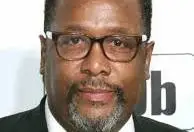
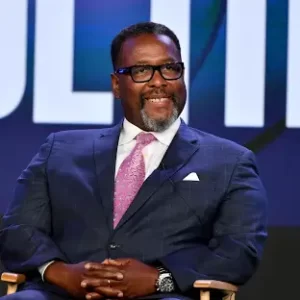
Often omitted in the chaos surrounding the looming Harris vs. Trump Presidential election are discussions regarding when and where Black men enter. Far too frequently, political campaigns operate without much consideration for Black America in general and Black men in particular. It is almost as if we are invisible, and our pressing concerns fail to rise to the level of being after-thoughts. So, it was pleasing to hear famed actor Wendell Pierce bring up the Black men during an interview at the Democratic National Convention.

Pierce encouraged Black men to vote by reminding them of the following.

There’s blood on that ballot box. Remember those who died in the rivers of Alabama and Mississippi. For them, do the honor and vote.

Black males could be Trump’s Trojan Horse due to them feeling ignored yet again by the Democratic Party and left behind by a world that seemingly promotes the rights of every group except for heterosexual males. Further problematizing this matter are the raging wars between Black men and Black women. More than a few brothers have succinctly expressed their frustrations by stating that they are tired of Black women’s shit.

If Black male issues are left unaddressed, Kamala Harris’ historic White House bid may very well become collateral damage by them either not casting a ballot or unwisely issuing a protest vote for Donald J. Trump.

To his credit, the politically astute Pierce recognizes this matter and the potential fallout from Black men refusing to support the Harris campaign. The celebrated actor poses an interesting question to the Black men who have taken a less-than-desired position regarding Kamala Harris and what she symbolizes in the following quote.

What would make you so fearful of someone who was so beloved of you, who was so loving to you, like your mother and your grandmother and your aunts and your sisters, that you cannot be proud and embolden yourself when you see someone from your community rise up?

Although Pierce’s question holds the potential to pierce the psyche of Black men, it fails at its assignment due to the opposing views that so many Black men hold toward those who failed at their job of nurturing them as children and respecting their manhood in the present moment. To the chagrin of the Democratic Party, a significant population of Black men are willing to cut off their nose to spite their face.

Most agree that such a political strategy is foolish and bound to compromise prior accomplishments. Yet, it is considered a reasonable position by many frustrated Black men. Unfortunately for the Harris Presidential campaign, I do not see the Black men who have decided to oppose her for reasons ranging from her bi-racial identity to her being a Black female, retreating from their dogged position. Such a posture is one that I am unsure that any political party can counter because, at its core, it is illogical yet speaks volumes about how troubled a significant population of Black men are now.

Dr. James Thomas Jones III

© Manhood, Race, and Culture 2024.