Not Totally Clarence’s Fault: Why There Is More Blame To Go Around Regarding The Ending of Affirmative Action than Justice Thomas

I am unsure if anyone with an ounce of common sense is surprised that the U.S. Supreme Court ruled against the use of Race in student admissions. In a 6-3 majority ruling, Chief Justice John Roberts wrote that the use of Race in school admissions “violates the Equal Protection Clause of the Fourteenth Amendment.” Most progressives understood long ago that this ruling was inevitable.

It was a foregone conclusion that Clarence Thomas would vote against using Race in school admissions. There is no need to rehash that Affirmative Action was a prerequisite to Thomas’ access to higher education that positioned him for an opportunistic climb to the Supreme Court. Once he arrived on the Court, Thomas displayed an insatiable desire to block the path he traveled for fellow Blacks in a legendary manner. Simply put, Thomas has repeatedly proven to be no friend of Black America.
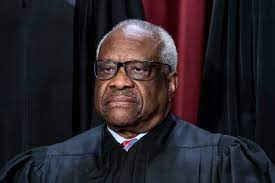
The most troubling aspect of Clarence Thomas’ position as a Supreme Court Justice flows from his uncanny yet reliable penchant to operate without considering historical context. On the surface, Thomas’s place in the recent decisions that “the color of a person’s skin is irrelevant to that individual’s equal status as a citizen of this nation” is a reasonable interpretation of the 14th Amendment. Unfortunately, his position flounders when placed within a larger context of racial conflict that began in 1619 when the first “half-free” persons of African descent arrived in the Jamestown Colony.

The level of historical illiteracy one must be constrained by to ignore Race as the most influential determining factor in a citizen’s fortunes in this land is astonishing. While it is theoretically correct that “the color of a person’s skin is irrelevant to that individual’s equal status as a citizen…” everything, and I do mean everything, about this discussion changes when the descendants of enslaved Africans enter the conversation. I fear that the present emotional furor regarding the Affirmative Action decision will cause my people to unwisely place total responsibility for the ruling on Clarence Thomas’ puny shoulders because he is not solely to blame for the ending of Affirmative Action.

In many ways, this regretful moment began when Civil Rights Leaders allowed the narrative surrounding Affirmative Action, a non-monetary reparations program intended to repair Black injury caused by institutionalized state-sponsored racial discrimination (Jim Crow, Black Codes, Racial Discrimination, Prejudice, etc.), to expand inexplicably and needlessly cover non-Black “minority groups.” One can attribute this unwise decision to political naivete or an astounding inability to advance Black rights with the necessary seriousness.

During the identity-politic-driven 1960s, multiple groups, from the LGBTQ+ to Feminist groups trained within the Civil Rights Movement, branched off and advanced their political agendas. The historical record shows that they successfully applied lessons learned during the Civil Rights Movement. Regardless of non-Black groups’ propagation of suffering and marginalization, their suffering pales compared to Blacks, the foremost victims of state-sanctioned discrimination from America’s founding.

Black political leaders have often refused to emphasize that Blacks were the only intended beneficiaries of the government initiative during Affirmative Action’s creation. Instead of demanding that the programs remain focused on Blacks and explaining why this must occur, they inexplicably worked to include other groups with no claim to the program. Maybe Black political leaders thought they were being politically savvy by forming alliances with other “minority” groups and collecting political currency to use later. I am bewildered that the above political leaders would vacate one of the few advantageous political positions Blacks have ever possessed. In hindsight, it is evident that this move to include others was a miscalculation as it is a “minority” group that led the charge to dismantle Affirmative Action when it served their interests.
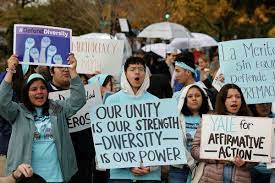
In the end, the narrative that the blame for the decline of Affirmative Action must be solely laid at the feet of Clarence Thomas is a false one that allows a host of other culprits to be acknowledged for their role in dismantling Affirmative Action. This was not a good day for Black America as it once again displayed Black political leaders’ comprehensive ineptitude. Yet, Blacks will again fail to hold their political leaders accountable for their failings due to a stupefying political illiteracy that guarantees their marginalized status for yet another generation.

James Thomas Jones III, Ph.D.

©Manhood, Race, and Culture, 2023


Please remember to subscribe to the Manhood, Race, and Culture YouTube Channel.

What the Murder of Tyre Nichols Says About How Some In Black America View Their “Brothers and Sisters” and Why

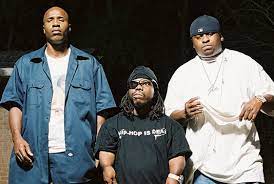
Although I have familial ties to Memphis, Tennessee, on my mother’s side, the moment I heard about the brutal beating of Tyre Nichols, I knew that such facts mattered little in analyzing this senseless tragedy. Ironically, my new home, Houston, trumps my connection to Memphis; let me explain. When pondering this tragedy and what it means specifically to Black America, Houston’s Geto Boys offers the most clarity.

The song I allude to is The World Is A Ghetto. The stanza below is lead rapper Scarface painting a dire picture representative of Black life worldwide.

Let’s take a journey to the other side
Where many people learn to live with their handicaps, while the others die
Where muthafuckas had no money spots
And if they did then they ass went insane
When all the money stops
I’m from the ghetto so I’m used to that
Look on your muthafuckin map and find Texas, and see where Houston at
It’s on the borderline of hard times
And it’s seldom that you hear niggas prayin’ and givin’ God time
That’s why your ask my mom pray for me
Because I know that even I gots to die, and he got a day for me
And every morning I wake up I’m kinda glad to be alive
’Cause thousands of my homeboys died
And very few died of old age
In most cases the incident covered up the whole page
From Amsterdam to Amarillo
It ain’t no secret

The world is a ghetto.

Scarface (1996)

Scarface’s lyrics about the perils of Black life, “From Amsterdam to Amarillo,” are a dreadful reminder to Black Men regarding the tenuous nature of the next moment. Unfortunately for Tyre Nichols’ family and friends, they will be reminded of this sobering reality daily.

When I heard that a Black man had been beaten to death by Memphis law enforcement officers, I cringed for several reasons.

  • I could only imagine the violence necessary to beat a man to death. Even Rodney King survived his beating at the hands of Stacey Koon, Laurence Powell, Theodore Briseno, and Timothy Wind.
  • I feared that this was the latest generations Rodney King incident.

As I considered this moment, the words of Malcolm X emerged from my mental Rolodex. According to Brother Malcolm, during the Civil Rights Movement, America was sitting atop a racial powder keg bound to explode with the slightest spark.

Yet somehow, this moment is different from other occurrences of police violence toward Blacks. Black male police officers delivered the mob-style beating of Tyre Nichols. As a result of this unprecedented occurrence, I have a few questions on my mind.

  • What does this event mean for Black men and Black America?
  • What does Tyre Nichols’s taped beating death at the hands of Black men say about how we view and behave toward each other?

I am sure we can agree on the following. The catalyst for the fatal beating of Mr. Nichols had little to do with the traffic stop. The many socialization issues that provided a smooth path for Black police officers to muster up the adrenaline-fueled rage they expressed via physical violence on Tyre Nichols began long before this night. It started before they became law enforcement officers. The path to the Black-on-Black brutality that we witness and hear daily is rooted in a complex socialization process that every American experiences; it takes root in many.

Although rarely discussed, it is challenging to be reared in America and develop an unbridled love for Black people. Experience has taught me that the following is valid for most Black people. We love the relatively few Black people we know personally, yet harbor levels of a rarely verbalized pessimistic view of others. Let’s be clear: this socialization process produces such significant bias among Blacks that it is not a stretch to term it a form of mental illness.

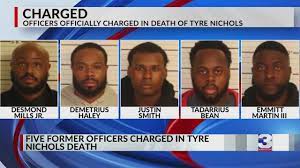
One merely needs to take a step back and consider the nicety manner that Blacks treat each other. This extreme hatred is expressed via our unwillingness to acknowledge our kind as they pass. The general skepticism Black men receive from Black women when approached for dating purposes. The vicious verbal and physical brutality that Black men, women, and children pour onto each other without provocation, being Black and present, seems sufficient provocation. The beating delivered by Memphis Police Department Officers Desmond Mills, Justin Smith, Emmitt Martin, Tadarrius Bean, and Demetrius Haley against Tyre Nichols is a by-product of many things, none of them good.

As the nation mourns what we have become, the onus is on Black America to go beyond understandable sorrow and tears and begin serious action to reverse a socialization process that results in us hating each other, if not ourselves. I will not portend to know the path forward; however, I can tell you with unshakable certainty that what we have been doing lately is not working for any of us.

Increase the love y’all!!!!!!!

James Thomas Jones III, Ph.D.

©Manhood, Race, and Culture, 2023

Please subscribe to the Manhood, Race, and Culture YouTube Channel.


How Black America Must React to Deion Sanders Exit From Jackson State University

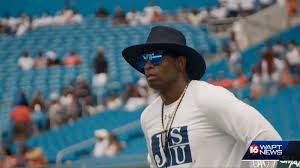
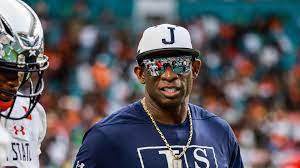
According to ESPN’s Pete Thamel, Deion Sanders will accept an offer from the University of Colorado – Boulder to become its next head football coach. As mentioned in this space days ago, the rise of Jackson State University (JSU) Deion Sanders as a viable head football coach has been a riveting story filled with storylines revolving around various racial matters. The alluded conversation pieces extended beyond inequitable funding of HBCUs to the impoverished state of Jackson, Mississippi.

Considering his penchant for grabbing headlines, it is unsurprising that “Coach Prime” would be the conduit for such discussions.

Few are surprised to see Sanders exit JSU in favor of the University of Colorado – Boulder. Most people postulate that this moment is not only inevitable but also career advancement. Those possessing the latter belief are the type of Negroes who maintain that “the white man’s ice is colder.” Although such people are far from rare within Black America, fortunately, their dour perspective fails to encompass the entirety of Black thought. Thousands of Black educators and coaches have displayed a socially responsible individualism that allows them to aid the race while advancing professionally.

No reasonable-minded successful Black person fails to understand that they stand on the shoulders of previous generations. In Langston Hughes’ classic Mother to Son poem, the unnamed mother reflects the rough road that prior generations traveled and their hopes for those to come.

Well, son, I’ll tell you:

Life for me ain’t been no crystal stair.

It’s had tacks in it,

And splinters,

And boards torn up,

And places with no carpet on the floor—

Bare.

But all the time

I’se been a-climbin’ on,

And reachin’ landin’s,

And turnin’ corners,

And sometimes goin’ in the dark

Where there ain’t been no light.

So boy, don’t you turn back.

Langston Hughes (1922)

I do not doubt that Deion Sanders realizes that he, like the rest of us, stands on the shoulders of others. Unfortunately, this knowledge fails to order his steps as it has notable race men of yesteryear. To the chagrin of many, the moment a “better” opportunity arises, Coach Prime is exiting JSU for what he believes are the manicured green pastures of a predominantly white institution. Make no mistake; the green in “greener pastures” is money.

Of course, Deion Sanders’ exit will be a talking point for Black America, particularly sports enthusiasts and those associated with HBCUs, for a few news cycles. Another occurrence that has nothing to do with the future of Black America will replace this matter. Black America will lose the opportunity for a substantive discussion regarding socially responsible individualism.

Black America mustn’t get bogged down because Deion Sanders is leaving JSU and addressing more important matters such as taking control of HBCUs in every imaginable way.

Now, what does taking complete control of HBCUs resemble?

Taking control of HBCUs requires alums and the rest of Black America to prioritize becoming involved in every way possible with what should be centers of Black learning. It should be Black America that dictates the curriculum that our students engage and it must be Black dollars that bolster these institutions to the point that no program, goal, or achievement is considered impossible. Principles of socially responsible individualism must guide Blacks to send a monthly donation to their chosen HBCU as if it were a bill.

Such ACTION is much-needed and genuinely more critical than Deion “Prime Time” Sanders leaving JSU for the lily-white University of Colorado-Boulder. Only through socially responsible individualism can we bolster HBCUs to the point that they are on equal footing with other institutions and capable of guiding a glorious future for coming generations of Black America.

James Thomas Jones III, Ph.D.

©Manhood, Race, and Culture, 2022

Please remember to subscribe to the Manhood, Race, and Culture YouTube Channel.

You can contact me at ManhoodRaceCulture@gmail.com with ideas and issues you would like to address.

The Choice Is His: Should Deion Sanders Remain at Jackson State University?

During my twenty-year tenure as a Professor at an HBCU, I learned that there are principally two types of people serving students in educational institutions whose origins grew from the impossible dreams for education amongst the descendants of formerly enslaved Africans. The two types of people I refer to are as follows.

  • Those who consider the HBCU a stepping-stone until something “better” comes along.
  • Those educators and mentors consider the HBCU the ultimate destination.

Of course, the catalyst to my thoughts is the recent verification that the University of Colorado Boulder has offered their head football coach position to NFL Hall of Famer and current Jackson State University head coach Deion Sanders.

When one considers Jackson State’s meteoric success during the past two years, 22-2 win/loss mark during that period, most would say that it is reasonable and deserved that “Neon” Deion “Prime Time” Sanders would ascend to a Power 5 school. Such people fail to understand the importance of healthy, thriving HBCUs to uplift Black America and the nation. For those that understand the above, the opportunity to serve at an HBCU for any length of time, let alone the honor of serving for one’s entire career, is an educator’s highest honor. HBCUs provide Black educators an opportunity to extend the grand tradition of Black education by impacting the minds of the next generation of American thinkers, scholars, and leaders who happen to be Black. Trust me when I say that such individuals serve at HBCUs by choice, not an inability to jettison to more lucrative and notable places.

Examination of Deion Sanders’ presence and voluminous multi-faceted contributions must occur within the proper context. The impact that I allude to extends further than the gridiron. In his relatively brief time at Jackson State, Coach Prime has served as an advocate and influencer for the Jackson State University (JSU)community and the city by calling attention to long-neglected issues ranging from inequitable distribution of funds to HBCUs such as JSU and egregious problems such as the absence of clean drinking water within the overwhelmingly Black city.

America’s history of racism, discrimination, and prejudice serves as the backdrop of every issue impacting Black America. How could it not? Belief in white superiority is so ingrained within this nation that many Blacks behave as if their affiliation with a predominantly white institution/business/university trumps anything Black America offers. Unbeknownst to such Blacks possessing such a dour view of their origins, their worldview serves as a major portion to the answer to why “Black folks can’t seem to get it together.”

So, as many await Deion Sanders’s decision, many affiliated with HBCUs will view this moment seeking to garner insight into an age-old question of “do Black people still think that the white man’s ice is colder.” A significant segment of Black America still prefers predominantly white institutions to HBCUs. If Deion Sanders chooses to exit JSU for the lily-white University of Colorado, it will be another psychological blow to politically astute Blacks for many reasons.

Even Omar Little, a character on The Wire, told us that a man must have a code. Hopefully, Deion Sanders will prove that some things are more important than “ascending to a Power 5 conference” and pursuing athletic accomplishments that ultimately mean nothing in this battle to liberate Black America.

The choice is his.

James Thomas Jones III, Ph.D.

©Manhood, Race, and Culture, 2022

Please remember to subscribe to the Manhood, Race, and Culture YouTube Channel.
You can always contact me at ManhoodRaceCulture@gmail.com with ideas and issues that you would like to have addressed.


A Few Thoughts Regarding Why Many Black Men Will Not Be Voting In This Year’s Election: It’s A Missed Opportunity

Y’all telling me that I need to get out and vote, huh, why?
Ain’t nobody black running but crack-kers, so, why I got to register?
I’m thinking of better shit to do with my time!!!!!

Andre 3000 (OutKast)


The criticism hurled at Black males always increases during political season. One could set their clock by it. Politically engaged Black men realize they are destined to be blamed when a candidate such as Stacey Abrams loses while receiving little of the celebratory kudos when Barack Obama ascends to the Oval Office.

As with most things involving Black men, the injection of their presence into political discussion problematizes matters exponentially. Predictably, much discussion about Black men and the franchise occurs without their input. We are frequently relegated to lab mice commented upon by political talking heads.

If only the political pundits that speak with unwarranted authority resting on little more than copious amounts of historical illiteracy regarding America’s convoluted racial history abandoned such foolishness, they may learn that Black males’ non-participation is attributable to the perceived irrelevance of American politics. Far too many poor and working-class Black men have been positioned in a “damned if you do and damned if you don’t” situation. OutKast’s Andre 3000 insightful lyric that he is “thinking of better shit to do with my time” sums up many Black males’ view of the worthlessness of political engagement.

It is difficult to argue against well-known data that highlights Black men lagging behind their contemporaries in a host of areas such as:

  • Educational Achievement
  • Life-Expectancy
  • Income
  • Incarceration Rates

When one considers that we are all conversant on the myriad issues facing Black men, it is time that we begin searching for solutions to the above societal maladies.

The most crucial question facing Black America should revolve around Black men’s inability to recognize that their past, present, and future plights are inextricably linked to the political arena.

Unlike many of my contemporaries, I place the blame for Black males’ withdrawal from the political arena at the feet of Black America. I fully realize that it is a contentious thought to place the blame for Black male struggles in the political arena at the feet of our kind; however, such an assignment is the only one capable of alleviating the matter. Put simply, if we don’t own this problem, we will never take the definitive steps to mitigate it.

As has been consistently stated by those interested in uplifting Black males, “no one is coming to save you Black man.” Hence, we must educate our own in regard to history, politics, culture, economics, etc. Relevant education is the only path capable of reversing the unfortunate pattern of Black men ignoring the political process. I am sure that you agree that an absence of understanding regarding politics guarantees Black America will continue to reap the worst things this society has to offer.

The onus is on Black educators to teach, re-teach, and teach important life-saving material to their brethren. Yet, those in desperate need of such illumination also have a responsibility to listen and learn from those experts who are willing to teach.

We must never forget that “WE ALL THAT WE GOT!!!!!”


Committed to investigating, examining, and representing the African-American male, men, and manhood by offering commentary regarding the status of Black Men and Black Manhood as it relates to African-American Manhood, Race, Class, Politics, and Culture from an educated and authentic African-American perspective aimed at improving the plight of African-American men and African-American Manhood in regards to Politics, Culture, Education, and Social Matters.