All posts by Dr. James Thomas Jones III

How Black Men Have Been Made Invisible by Bitter Black Women

To be honest with you, baseless commentary by a segment of Black women about Black men puts me into a state of disbelief because I understand that their emotional accusations spewed toward Black men do not reflect Black men in America. I do my best to sidestep such discussions. I realized long ago that such opinions are anecdotal recitations lacking evidence. During a recent podcast, I was ensnared by such a discussion.

A rambling discussion eventually brought forth assertions that Black men were solely to blame for both the disintegration of the Black family and the resulting struggles of children raised in single female-headed households. Predictably, it was a female panelist who led this unproductive discussion that reduced to Black men being blamed for not being present due to their “weakness.”

The argument reminded me of Ralph Ellison’s The Invisible Man.

 

Ellison’s The Invisible Man, an unnamed protagonist, does not lack a physical body, yet he is invisible because those around him “see only my surroundings, themselves, or figments of their imagination.” Although physically present, Ellison’s protagonist is no different from millions of Black men who are physically present, yet never really seen for who they are.

I considered this all too common attack on Black men to be identical to what the invisible man expressed. The female panelist’s decision to consolidate the identities and experiences of Black men who for whatever reason do not awake under the same roof covering their children as “weak” displays an astounding ignorance of Black lives, regardless of gender. Although I understand that generalizations permit us to discuss things, they still must be grounded in truth. The attack on Black men mentioned above does not rest on a morsel of truth.

Of course, I protested this mischaracterization of Black men by highlighting a host of reasons explaining this social epidemic, such as the emotionally driven, usually illogical, decisions and antics of women who do not understand the Black family’s importance in creating a familial legacy that bolsters the next generation’s opportunities for success. Not even my assertion that factors such as American courts’ decision to side with women when it comes to custody of children, drug addiction, or the “last hired, first fired” economic quandary that so many Black men experience seemed to penetrate the wild assertions that denigrated Black men into being weak.

In the end, the accusations of a bitter segment of Black women regarding the absence of Black fathers in the home or their inability to be selected for marriage is an extreme simplification that says little about the Black men that they have rendered invisible yet speaks volumes about their unwillingness to take inventory of themselves and the lives they lead while projecting their views on nameless Black men. It appears that some Black women are looking back at their lives and realizing that they have failed to develop a life worth living. Put simply, they have somehow managed to miss the truly important things such as family and relationships that were tightly grasped by their ancestors. It seems that in their rush to blame Black men for self-acknowledged unfulfilling lonely lives, they have forgotten to take any accountability for the lives they lead.

The classic saying “if you do what you always did, you’re going to get what you always got” applies to so many, certainly not all, Black women. It may be time for these frustrated, angry, and irrational Black females to stop blaming Black men for their poor decision-making and inability to forge a lasting relationship with men of any Race; after all, when one looks at the marriage rates, no man of any Race has or ever will choose them and you can’t blame Black men for that!!!!!!

James Thomas Jones III, Ph.D.

©Manhood, Race, and Culture, 2023

#ManhoodRaceCulture

The Dire Plight of the American Teacher

I do not know of a single African-American Professor who does not possess the desire to recreate themselves. Simply put, one of the major by-products of Black graduate students working their way through the snares and traps of academia is a severe desire to make the path more accessible and passable for those that follow. By the time we earn our Ph.D. s, no one in the world can impress upon us that there are enough Black academics and intellectuals to mentor us through the tough times.

When one considers that the rough terrain that Black Ph.D.’s must cross is often made more difficult by Professors who detest our presence for a host of reasons directly tied to white supremacist thought, engagement with one of “us” while in graduate school can serve as a much-needed gust of wind propelling us toward our lofty goal.

Trust me when I say that the pride I experience when yet another of my students crosses the threshold of earning their Doctorate degree is not one of euphoria but rather an occasion to pause for several moments to celebrate the achievement but, more importantly, to bow my head in honor and respect to the ancestors who aided this process in one way or another.

In light of the above, I hope that you can understand my unending pride when several of my students, most recently Ms. Coiette P. Gaston, who now is a colleague working in the same department as myself, cross that final threshold in their chosen field.

Suppose I have achieved nothing else in the academy. In that case, I can proudly state that I have contributed to more than capable Black Professors being available to mentor and teach precocious Black students researching issues of importance to Black America. I took the job of ensuring that the pipeline of Black thinkers continued flowing with the utmost seriousness.

Manufacturing excellent Black students begins well before arriving on a college campus. Those I reference have undergone a K-12 curriculum that has prepared them for higher education. My contemporaries’ dedication to reproducing ourselves will never blind us to the heavy lifting in K-12.

Only a fool fails to see the interconnectedness between teachers and professors—an overstanding of the interconnectedness between educators’ mandates that I closely monitor the matter of teacher shortage.

According to a recent Learning Policy Institute survey, droves of full-time teachers choose to exit the profession via early retirement or more attractive employment opportunities. The most cited catalyst for the above changes is the twin evils of psychological stress and low pay. American teachers have historically been abused, misused, and devalued by the very society they have nobly served for centuries. Data states that one-third of those exiting the classroom report a typical work week of over “56 hours or more.” One-third of current teachers report working a second job to “make ends meet.” According to the Learning Policy Institute survey, “64 percent of respondents said their pay wasn’t sufficient to merit the risk or stress.”

The fleeing of the teacher ranks is so common that many of those I have aided on the path to participating in this noble profession have exited the classroom. The past five years have been ferocious for the brilliant youth whose minds I helped mold in my History courses. So many of these young Black teachers that Charles Hamilton Houston would have considered “levers for social justice” have exited the teaching profession for the same reasons highlighted by the Learning Policy Institute study. The teacher shortage crisis has gotten so bad that the Houston Independent School District that many of my students vacated was marred by over seven-hundred vacant teaching positions during a recent summer, according to the Texas Tribune.

It is past time that the U.S. Government (local, state, and federal) makes a decisive move on behalf of American educators. When you think about it, they are the foundation for this nation’s prosperity; however, they are much like laborers who have been left out of profits. The time for shucking and jiving educators has been over for decades; it is now time for the entire nation not only to agree to pay teachers a livable wage but also allow them a seat at the table when substantive issues impacting their lives are being discussed.

One more thing. If you were able to read this, thank your favorite teacher.

James Thomas Jones III, Ph.D.

©Manhood, Race, and Culture, 2023


Please remember to subscribe to the Manhood, Race, and Culture YouTube Channel.


Why Do So Many Black Women Like Keke Palmer Refuse To Grow Up?: Yet Another Sign of Black Cultural Dysfunction

I am sure you’re privy to the recent brouhaha between Keke Palmer and her boyfriend, Darius Jackson. If you are one of the fortunate ones that somehow sidestepped the latest episode of “Black folk sure know how to waste some time,” let me bring you up to speed.

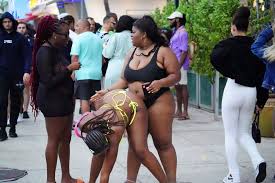
During a trip to Las Vegas, Keke Palmer and her girlfriends attended a performance by R&B superstar Usher. Adorned in a see-through ensemble with a bodysuit beneath, Palmer was called to the stage by Usher. Video footage shows Usher serenading Keke as she twirled around so that everyone in the building could view her hind parts while being cheered on by her entourage. When footage of the adult behavior appeared on Twitter, Mr. Jackson, Palmer’s boyfriend, responded with what most consider a controlling message of toxic manhood via Twitter that read, “It’s the outfit tho…you a mom.”

Of course, those folks that rushed to the defense of any Black woman, regardless of her antics, criticized Darius Jackson while reminding him that he was merely a boyfriend, not a husband. In response to the vociferous criticism from those who encourage the continuing devolution of Black women and Black culture, Mr. Jackson offered the following rebuttal.

We live in a generation where a man of the family doesn’t want the wife & mother to his kids to showcase booty cheeks to please others & he gets told how much of a hater he is. This is my family & my representation. I have standards & morals to what I believe. I rest my case.

I found this young man’s response compelling and reasonable for someone attempting to navigate the myriad obstacles that usually derail Black families. Yet, this essay you are holding in your hands was not caused by the much-too-public spat between Keke and Darius. Raena Boston, a social activist for Black women’s rights, was the catalyst for the words you are reading.

According to Boston, Darius Jackson is not a dutiful boyfriend seeking to build a family with Keke Palmer, the mother of his newborn child. Unbeknownst to Darius and every other sensible Black man, he is “setting the terms of a woman’s existence.” In yet another moment of incoherent psycho-feminist babble, Raena Boston trespasses across adulthood, parental obligations, familial structure, and manhood in one swoop; it is pretty impressive when viewed through such a lens. According to Babbling Boston,

There’s this idea that once a woman becomes partnered with a man, it’s almost like that’s the beginning of the death of herself. And then, once you have kids, it’s game over. You’re just in the service of your husband, in the service of your children. You, as a person, cease to exist in a lot of ways.

In many ways, Boston’s statement reveals the illogical belief that neither adulthood nor the birth of children should alter the lives of Black women. Millions of well-adjusted, sensible, grown Black folks disagree with such foolishness. Boston could not be more wrong in her rhetorical flourish; ask any responsible Black parent, regardless of their gender.

Boston is unaware of the age-old wisdom that once children arrive, your time as a free-wheeling person without an ounce of responsibility ceases. The failure to understand such simple matters that have served as guides for civilized people for centuries is stupefying.

Although this is not a gender issue, one does not need to look far to find dutiful fathers who have worked nearly to death to serve their wives and children. The same goes for women who have sacrificed all in the service of their husband and their children. These sacrifices are what adulthood looks like.

I pray that someone informs Keke of this crucial information before it is too late. I’m sure this message will not arrive from the likes of Raena Boston or the legion of grown boys and girls who are so enamored with the utter foolishness they enjoy to the detriment of their spouses, children, and the larger community.

It is time that Black parents, regardless of gender, get serious about life because a perusal of any census data proves that they are the only one’s out here playing in the high-stakes game of life. While others are building wealth and a legacy for their children, far too many “grown” Black folks remain committed to little more than what the Notorious B.I.G. called “party and bullshit.”

Sit your ass down and instill some semblance of self-esteem in your children so that they will not need to seek it from a public that will view them as pitiful people without purpose or a sense of self.

To all the parents stung by my words, it is time to stand in front of a mirror and tell yourself the following mantra until it is drilled into your foolish head. “Your time is up, you old bastard.”

James Thomas Jones III, Ph.D.

©Manhood, Race, and Culture, 2023


Please remember to subscribe to the Manhood, Race, and Culture YouTube Channel.


Black America We Have A Significant Culture Problem: Essence Festival 2023

I am old enough to remember when Essence covered the diverse nature and multiple issues of Black women living in a white man’s world. Essence went further in their coverage of Black women than merely printing beautiful pictures of them; there was no beauty of the week centerfold within the pages of Essence. I recall the presentation and discussion of substantive issues impacting Black America and Black women. When one desired exposure to the multi-faceted nature of Black women, Essence was mandatory reading.

The recent performances of Megan Thee Stallion and Janelle Monáe at Essence Festival reflect the diversity found among Black women regarding how they choose to present themselves to a world whose amused contempt and pity rise with the risqué nature of the presentation. At the same time, the alluded performances have resurfaced an essential issue among Black America regarding what a Black woman should be and should do. It can be reasonably stated that Black women have never been monolithic in any facet of life. This rich diversity of thought, dress, language, and public behavior has unfortunately forced a conversation that sadly ends in the conclusion that there is now a vocal minority population that can no longer be considered a credit to the Race regardless of the evaluation criterion.

In a long-forgotten comedy special, Chris Rock made the shocking statement that a Civil War is occurring in Black America between Black people and Niggas, and Niggas have got to go. Although I would like to cite the recent performances of Megan Thee Stallion and Janelle Monáe as the catalyst to a significant split regarding public decorum, morality, and sensibility among Black women, the truth of the matter is that those issues have been gradually worsening at an increasingly rapid pace for decades. Somewhere along the way, many, certainly not all, Black women have abandoned Black America’s cultural norms and chosen to violate our ancestors’ age-old advice to not go out and “show your color.”

One needs to look no further than the response that artist India Arie’s reaction to the performances mentioned above that, including a twenty-woman twerk fest from festival attendees at Meg’s invitation or Janelle Monáe’s idiotic decision to bare a pasty-covered nipple to the disappointment of Black men, women, and children attending the Essence Festival. Arie issued the following constructive criticism in the wake of the performances.

Is everything for KIDS? No, is everything for EVERYBODY? So when we as a culture make something like this mainstream, it shows a lack of discretion and discernment.

The response that the above comment received from a vocal minority was telling due to its wicked, horrific, and unceasing nature. Supporters of the public twerk fest and unnecessary display of nudity dismissed India Arie’s criticism as irrelevant and out of touch with the times. Undoubtedly, a significant segment of our population celebrates the devolving culture threatening to bar Black success permanently.

This championing of socially unacceptable brutish behavior among Black women and girls is proving to be a significant threat to Black America’s existence. One needs to look no further than the manosphere to encounter Black men expressing frustrations regarding the absence of marriageable Black women. Many alluded men have reacted to the declining numbers of what they deem suitable Black women by searching foreign lands for a lifetime mate.

The most frightening aspect of this matter is that the decline of marriageable Black men and women is an unprecedented threat to Black existence. However, there appears to be no way of stopping this cultural devolution that ultimately results in Black women celebrating their status as bitches, hoes, and baby mommas and Black men as uneducated, inarticulate thugs, absent a modicum of discipline. Unbeknownst to those who are reveling in copious amounts of ignorance, their Black contemporaries disapprove of their flawed value system and display a penchant for leaving them behind as they build lives worth living.

In time, the developing gap between an educated class of responsible, forward-looking Blacks and a have-not class will be too vast for the latter group who have chosen to twerk their way through life when they should have been working to cross. Fortunately for future generations of Black America, the formula for creating a life worth living remains available if they desire it. If not, they should seek out their tribe and be prepared to “throw that ass in a circle.”

We need Black men and women to do better!!!!!!

Immediately!!!!!!!

James Thomas Jones III, Ph.D.

©Manhood, Race, and Culture, 2023


Please remember to subscribe to the Manhood, Race, and Culture YouTube Channel.


This Land Is My Land: Reflections On Patriotism and Black America

As a historian whose studies have focused on the African-American experience, Independence Day has always been a date that causes tremendous reflection on my status within this nation. My perspective is heavily influenced by the undeniable contributions of my ancestors to the founding, development, and operation of this nation shared with the populace that James Baldwin termed his white countrymen. Of course, this matter is problematized by the long history of racial attacks from marauding whites whose foremost priority was placing a selfish claim on America.

I do not doubt that if most of my white countrymen were given a truth serum, they would state America belongs solely to them. Despite a mountain of evidence displaying the indispensable contributions of Blacks, most whites will never be convinced otherwise. Unfortunately, most of my Black countrymen agree with their counterparts that this is a white land they do not want to claim even a tiny portion of.

This refusal of Blacks to claim a sizable portion of this nation that is as much their birthright as their white countrymen provides a keen insight into the general psyche of far too many Blacks. For some inexplicable reason, most Blacks have tended to behave as if this is a white man’s land, allowing them to dictate their status in the land for which Crispus Attucks and the Massachusetts 54th died. Simply put, my Black countrymen have been far too willing to be subservient to a white population whose priority is to rule.

Brother Malcolm once stated, “Only a fool would allow his oppressor to educate his children.” I want to slightly alter our dear Brother’s statement: “Only a fool would allow his oppressor to tell him when and where he enters this place called America.” Blacks must begin to cease being so reactionary to the political positions and definitions provided to them by their historical oppressors.

Do we not have the mind to think for ourselves?

Must we wait until whites have spoken on or defined an issue before our position is established?

I wonder if the response to the above questions conveys an unwillingness to assert Black independent thought.

The presence of independent Black thought is crucial to understanding that America is as much your land as the whites and any attempts to control Black America’s economics, education, and politics. We must learn to evaluate the issues facing the Race and develop plans to address the myriad problems facing us in the present with a mind of preventing them from shadowing us into the future.

So, sing the following with me. “This land is my land; this land is your land…”

James Thomas Jones III, Ph.D.

©Manhood, Race, and Culture, 2023


Please remember to subscribe to the Manhood, Race, and Culture YouTube Channel.