Category Archives: Black Women

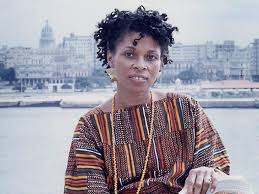
Reflections on Assata Shakur: Why we must never forget her revolutionary spirit

When I heard that Assata Shakur had gone to join the ancestors from a network of trusted comrades, I cringed at the news. I did not think for a second that this shocking revelation was a mere rumor or a part of some half-baked conspiracy. None of the people that I consider allies would share such important information had it not been independently verified.

I intuitively realized that I was not alone in considering this moment bittersweet. Although revolutionary-minded Blacks around the globe mourned Assata’s demise, a part of us celebrated at the fact that the monsters who pursued her to the grave had failed at their foremost desire to see the Black woman that they propagated as “the mother hen that kept them shooting” rot away inside a jail cell. Yet, the feeling that Black revolutionaries had somehow failed a basic assignments of protecting  Assata from the monsters that they continue to defy remains.

In the wake of her demise, I am hoping that we do not continue to fail Assata like we have so many of other revolutionaries by allowing their contributions to drift into a sea of forgetfulness. Particularly concerning is the fact that the sea of forgetfulness will swallow the legacies of our ancestors and make them irretrievable in due time. Black America has never had a generation that did not possess the potential of forgetting our past.

Feelings of inadequacy and failure regarding Assata and a host of other Black Power icons flows from the fact that we have yet to subdue our enemy in a significant manner. Although it is common to hear that misery loves company, I pray that I have much company in my bothered state from fellow educators, particularly those possessing the ability to impact K – 12 school curriculums.

Those curriculum and development leaders that I speak of should focus on providing a well-balanced intellectual diet for Black students that prods them forward. I am afraid that Black school administrators will continue the unfortunate tradition of failing to create curriculum that serves as a usable intellectual diet for Black children mired in a failing public school system. There should be little disagreement against the assertion that school curriculums possess the ability to bolster or stunt the intellectual curiosity of Black children.

Unfortunately for Black America, the curriculum development necessary for Black children to know the difference between Assata Shakur and Afeni Shakur is not evident. So, Black America stands in a familiar space, mourning the loss of a significant figure in our mighty walk and in danger of rushing forward too quickly as we seek to gain some semblance of closure.

We must NEVER forget Assata, her contributions, and the way that her opponents hunted her. The pain derived from examining Assata’s life, particularly her forced exile from the Black community that she worked so diligently to save must serve as fuel for future fights. Fights that we must ensure that our children understand and participate in as a result of the lessons and values that we have instilled in them. Our children are our only real hope to one day make America the welcoming nation that it has rarely been for our kind.

Dr. James Thomas Jones III

© Manhood, Race, and Culture 2025.
The Story of Harriet Jacobs (Linda Brent)

Black Rights Fugitive: Assata Shakur

How Black Men Have Been Made Invisible by Bitter Black Women

To be honest with you, baseless commentary by a segment of Black women about Black men puts me into a state of disbelief because I understand that their emotional accusations spewed toward Black men do not reflect Black men in America. I do my best to sidestep such discussions. I realized long ago that such opinions are anecdotal recitations lacking evidence. During a recent podcast, I was ensnared by such a discussion.

A rambling discussion eventually brought forth assertions that Black men were solely to blame for both the disintegration of the Black family and the resulting struggles of children raised in single female-headed households. Predictably, it was a female panelist who led this unproductive discussion that reduced to Black men being blamed for not being present due to their “weakness.”

The argument reminded me of Ralph Ellison’s The Invisible Man.


Ellison’s The Invisible Man, an unnamed protagonist, does not lack a physical body, yet he is invisible because those around him “see only my surroundings, themselves, or figments of their imagination.” Although physically present, Ellison’s protagonist is no different from millions of Black men who are physically present, yet never really seen for who they are.

I considered this all too common attack on Black men to be identical to what the invisible man expressed. The female panelist’s decision to consolidate the identities and experiences of Black men who for whatever reason do not awake under the same roof covering their children as “weak” displays an astounding ignorance of Black lives, regardless of gender. Although I understand that generalizations permit us to discuss things, they still must be grounded in truth. The attack on Black men mentioned above does not rest on a morsel of truth.

Of course, I protested this mischaracterization of Black men by highlighting a host of reasons explaining this social epidemic, such as the emotionally driven, usually illogical, decisions and antics of women who do not understand the Black family’s importance in creating a familial legacy that bolsters the next generation’s opportunities for success. Not even my assertion that factors such as American courts’ decision to side with women when it comes to custody of children, drug addiction, or the “last hired, first fired” economic quandary that so many Black men experience seemed to penetrate the wild assertions that denigrated Black men into being weak.

In the end, the accusations of a bitter segment of Black women regarding the absence of Black fathers in the home or their inability to be selected for marriage is an extreme simplification that says little about the Black men that they have rendered invisible yet speaks volumes about their unwillingness to take inventory of themselves and the lives they lead while projecting their views on nameless Black men. It appears that some Black women are looking back at their lives and realizing that they have failed to develop a life worth living. Put simply, they have somehow managed to miss the truly important things such as family and relationships that were tightly grasped by their ancestors. It seems that in their rush to blame Black men for self-acknowledged unfulfilling lonely lives, they have forgotten to take any accountability for the lives they lead.

The classic saying “if you do what you always did, you’re going to get what you always got” applies to so many, certainly not all, Black women. It may be time for these frustrated, angry, and irrational Black females to stop blaming Black men for their poor decision-making and inability to forge a lasting relationship with men of any Race; after all, when one looks at the marriage rates, no man of any Race has or ever will choose them and you can’t blame Black men for that!!!!!!

James Thomas Jones III, Ph.D.

©Manhood, Race, and Culture, 2023

#ManhoodRaceCulture